
My Travels Through Sindh

I longed to see and explore Sindh, my ancestral home. My love for Sindh was nurtured by the happy memories and stories my grandmother and father narrated of their home and homeland lost during Partition. This dream was made possible by Imtiaz Khan, her father Shah Moulana Bux and his brother Shah Allah Bux were friends with my grandfather, Dr. Kishinchand.
When I asked her which places on my wish list would be possible, to my amazement she said, “All.” And so it was!
Imtiaz Khan marshalled her whole family and made elaborate impeccable arrangements every step of the way. Her brother, Ifthikar Soomro, planned all the arrangements. Her daughter Nabeela Soomro hosted me and I felt loved and cared for. Her other daughter Adeela Tareen along with her husband Sohail and daughter Madhiya accompanied me as I searched for my roots and discovered my culture — tangible and intangible. The legendary hospitality of the people in Sindh is so true. I was surrounded by the sound of Sindhi everywhere I went for the first time in my life — but then of course I was in Sindh! Everyone spoke Sindhi — which made me feel I was at home! I had a memorable trip and can’t wait to go back.
%20(1).jpeg)

We travelled up the Indus…
Karachi—Makli, Thatta—Keenjhar Lake—Bhit—Halla—Uderolal—Sehwan—
Mohenjodaro—Shikarpur—Faiz Mahal, Kot Diji—Khairpur—Sachal Sarmast
Darga, Daraza—Sant Satram Dham Raharki—Sadhubela, Zinda Pir—Sukkar—
Harappa—Multan—Karachi—Hyderabad—Jamshoro—Karachi

Day 1 - Tuesday, December 11 - Karachi

We arrived in the evening to a warm welcome with ajrakh scarves at the airport by Imtiaz Aunty and her daughters—Adeela and Nabeela.
At home, we were greeted with Deewan’s mithal from Lakhidar Shikarpur, cakes from Bombay Bakery, Hyderabad, soan halwa from Multan all specifically brought down from each place and a welcome cake.
A banquet dinner for 11 of us on a long dining table lined endlessly with vegetarian food specially cooked for us and served with lots of love and laughter by Imtiaz Khan to Adeela Tareen, Nabeela Soomro and her
granddaughter Madhiya and nephew Hameer Soomro, Imran and Nagina Soomro, Kishore, Sudha and me.

Day 2 - Wednesday, December 12 - Karachi

Shahid Allah Bux Soomro

The vest worn by Shahid Allah
Bux when he was shot
We began our day with breakfast with Hameer Soomro, grandson of martyr Allah Bux Soomro.
We had breakfast at this very long dining table again. The very long dining table had so many of us including Hameer’s sister, Imtiaz Aunty, Adeela, Sudha, Kishore and me.
Hameer’s home had beautiful furniture from Shikarpur solid teak with inlay work that was finely crafted and reflective of the glorious days when Shikarpur was flourishing and called the Paris of the East.
Shikarpur, a trading and banking centre near the Bolan Pass had trade transactions from Central Asia to Cochin.
Shikarpur was a hub for trade and banking for the caravans from Afghanistan, Iran and Central Asia. The promissory notes of the Shikarpuri bankers were honoured all along the route.

Home of Hussain Haroon—a beautiful homem with fine peices of furniture from the havelis of Shikarpur

We had a wonderful afternoon with him.

Our first tourist spot was Mohatta Palace, previously home of Shivratran Chandraratan Mohatta and now converted to a museum. A beautiful setting against which Abida Parveen sings every year.

A family dinner awaited us at Imtiaz aunty’s brother Ifthikar Soomro’s home with such warm hospitality, affection, joy, lavish gifts and an elaborate spread. Ifthikar Uncle had arranged meticulously for our trip both in terms of route and arrangements along the way and at his family haveli in Shikarpur.

It was wonderful to feel the warmth and graciousness of their hospitality. The evening ended in a memorable vintage car ride with his daughter and son-in-law.
Day 3 - Thursday, December 13 - Karachi

We started with a heritage walk by Pakistanchowk.com of old Karachi starting at Pakistan Chowk opposite the printers building - a centre for intellectual exchange owned by the Shahanis, founders of DJ Sindh College. I also met the founders’ son Mr. Jeetendra Shahani.


Shri Swaminarayan Mandir
A discovery through a small guarded entrance way revealed a large and old temple complex of Shri Swaminarayan Mandir about 32,000 sq. yards built in 1854, surrounded on 3 sides by home homes of Hindu Sindhi families on Bandar Road.

We saw the Gordhandas cloth market where my mother in law’s father had a shop. Kishore’s father had a shop there too. We just stood there mesmerised imagining what the old days were like—trading on those large platforms. We walked on Burnes road and Bandar Road.

We visited Dolman Mall after a snack at Barbecue. We shopped Pakistani suits, fabrics, clothes art Khadi, Nishat Linen and Noorjehan Bilgrami’s boutique. She has revived natural dyed ajrak clothing.
Dinner at Adeela’s and Sohail’s home

Sohail, Adeela’s husband flew down from Multan to accompany us on our Sindh trip. We met family and friends of Adeela and Sohail for a lovely evening of fun-filled comaraderie, great food and beautiful live Sufi music by Adiba Parveen’s star student Dilshad Mirza.
Day 4 - Friday December 14 - Sindh Journey begins

Karachi—Makli, Thatta—Keenjahar Lake—Bhit—Hala.
Seven of us set off in 2 cars for our travels from Karachi up the Indus to Shikarpur Experiencing the river weaving its way as we visited the towns that had developed on its banks starting with.
Makli


We received a traditional welcome with ajrak stoles and viewed the vast terrain of the world’s largest necropolis with over half a million intricately carved stone monuments and graves of kings, queens, governors, saints, scholars, and philosophers over 10 square kilometres in a fusion of diverse influence of Gujarati Hindu architecture, Mughal architecture including Persian and Asian examples of architectural terra-cotta from the 14th to the 18th century. It is an amazing site.


Keenjhar Lake


Where the legend of Noori and Jam Tamachi took place and till today their shine is visited. Migratory birds from as far as Russia visit here every winter (ducks, geese, flamingos, cormorants, waders, herons, egrets, ibises, terns, coots and gulls.) It has been observed as a breeding area of the black-crowned night heron, the cotton pygmy goose, purples swamp hen and pheasant-tailed jacana.
Bhit

The beautiful darga of Shah Abdul Latif where the fakirs continue the unbroken 300 year tradition of singing in waiee with the 5 stringed danbooru. The Kalams from his rassolo sung through the night.


Hala


Ajrak and tile making traditions continues in Hala, Once the world’s largest producer of Indigo. We met the artisans who print the beautiful, traditional Ajrak in natural dyes with the blocks in their workshop. We ordered some for ourselves from their collection to our specifications which they sent us
before we left Karachi.
We visited the traditional tile workshop and saw the artisans working on the wheel, hand painting and making tiles and pottery objects.
We dined by the fireside at a farmhouse in Hala and stayed in a guest house behind Shah Abdul Latif’s Darga listening to waa’i sung by fakirs all night.
Day 5 - Saturday December 15

Uderolal

Uderolal - Jhulelal


A flame from this Jyot was carried when devotees left Uderolal and it still burns in the Jhulelal temple in Ulhasnagar, Bombay. The large temple complex was very well maintained. We met 2 pandits and had a peaceful and sacred darshan.
The beautiful haveli temple complex with an adjoining mosque to Jhulelal in Uderolal was a homecoming. There was a beautiful Samadhi, the Jyot and the shoes of Jhulelal.
Sehwan - Lal Shabaz Qualander


The tomb was beautiful but very crowded including the access streets from the bazaar. In the courtyard there was the sound of beating drums and devotees dancing.
We witnessed one girl going into a trance and her father holding has as she came out of it.
Mohenjodaro


Standing at the cradle of civilisation - The Indus Valley civilisation was a surreal experience, as we stood inside the great bath an walked around the planned city.
We were there at dusk near the top of the citadel looking at the vast area of the development, in awe and wonder of the ancient civilisation.
Shikarpur


We arrived at the hometown of our ancestors at night to a warm welcome from our host Iftikhar Soomro in his haveli at Hathidar, brother of Imtiaz Khan and son of my grandfather’s friend Khan Bahadur Moula Bux Soomro with nostalgic specialities from Lakhidar for dinner including the famous Deewan’s falooda kulfi. We stayed at Dr. Rufina Soomro’s home - the haveli of Shah Allah Bux Soomro’s haveli in Sat Pir. We woke up to the famous delicacies from Lakhidar I had heard about so many times from my grandmother, father and father in law like kunna ja bhe, dhim dal and chutney - slow cooked bhe and moong dal over coal in an earthenware pot overnight, and gajar halwa.


We continue onto Khatwaari durbar - The haveli darbar was close to Lullan jo Paro - within walking distance. It was a large haveli on the inside from a narrow street, it had been well maintained.
Day 6 - Sunday December 16

The streets were narrow with open drains. I was told they used to be closed, and the streets were washed twice a day with a fine spray of rose water to perfume the air.
The homes were in disrepair, the families living in them were unable to maintain them.

Amir Soomro joined us and graciously escorted us to see the Shikarpur of our many stories from our parents and grandparents - We set out walking from Sat Pir through the streets to the famous (Teak wood slatted sloped) covered roof Dhak Bazar busy, with many intersecting lanes in a grid each had a specific speciality, some homes had a picture of Guru Nanak on the door.


We then visited the university, Seth Sitaldas and Chellasingh - C & S Govt. Degree College, Shikarpur is the oldest college built by Hindus in 1933. It was originally on 50 acres but now occupies just 5 acres. We received a warm welcome and were shown around.


The plaques with donor names were still there.

Dr. Deepak’s son Navin took us in the evening to Shahi Baag - the gardens I had heard so many stories about my grandfather visiting every evening in his Victoria. Merewether Pavilion was also there through though the gardens had shrunk from their original 100 acres to 3 acres.


Fortunately the Sindh Vah Pooj Shiri Samadha Ashram and Shankaranand Bharti temples were well kept. They were in the very large haveli style and worship had continued here.

We spent the evening with Dr. Deepak and his son Navin who were great hosts and gifted us with a beautiful ralli.
Day 7 - Monday December 17

Khairpur - One can recognise Khairpur by the date trees all along along the road
Kot Diji Fort

The Kot Diji Fort formerly known as Fort Ahmedabad, is an 18th-century Talpur-era fort that sits on the pre Harappan ancient site of Kot Diji of 3300 BCE.
Kot Diji Fort

Faiz Mahal - built in 1798 was the palace of the Talpur Monarchs. We were fortunate to see the richly decorated rooms & reception areas from inside. The family happened to be in residence there at that time.

Daraza- Sachal Sarmast Darga where we paid our respects


Raherki - Sant Satram Dham (SSD) is associated with the saint Kanwar Ram.
It is an amazingly large complex where the devotees from India come annually for pilgrimage. It was lovely to see a group of women in the temple sitting as group doing seva.
Sukkur

Sadhubela

A beautiful boat ride on the Indus takes us to Sadhubela - growing larger and larger as we reach closer to the island. I have grown up with the Sadhubela in Bombay and was happy to see the origin of Sadhubela a big complex for prayer and study and facilities to lodge in. We had Prasad at Sadhubela. There were peacocks walking with us in this serene place.


The barrage on the Indus


On our way back at dusk we took a boat ride in the Indus right upto the barrage. It was a magical at sunset and we passed the Saat Saheli along with dolphins swimming and diving. We passed the cave of the Saat Sahelis where the legend has it that praying at their grave heals women.
Zinda Pir of the Indus where palla swim upstream to pay respect before turning back - also known as - Uderolal, Jhulelal, Amarlal, Khwaja Khizr, Darya Shah and Ali. This had a temple and a mosque on the side at Dulah which we visited.
Day 8 - Tuesday December 18

Nasir Ahmed Soomro
At Shikarpur, we walked back to Lullan jo Paro with Professors Naseer Soomro and Professor Gehriraam who introduced us to Nazir Ahmed Soomro, retired librarian from the university. This gentleman immediately recognised my grandfather’s name Dr. Kishinchand and showed me my grandfather’s home and recounted that a red flowering creeper grew on the wall outside. From there I was able to identify my father in law’s home - Jethanand Madnani Lund’s Haveli wo doors and my father’s childhood friend's havelis - Uttamsingh next door and opposite Lullan Jo Haveli, (Sath puttan ji haveli - a mansion of seven sons)on the opposite side.
We then walked to the home that housed my grandfather’s surgery, consulting rooms and dispensary. He even remembered that my grandfather had two compounders.
He called us nyani (daughters) and gave the professors money - a thousand rupees to buy us mithai!
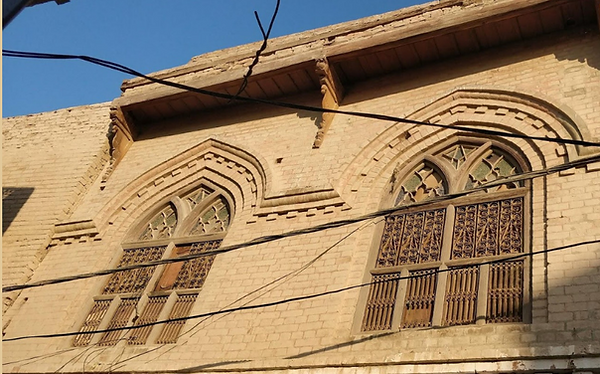
My father-in-law’s house

Uttamsingh’s Haveli

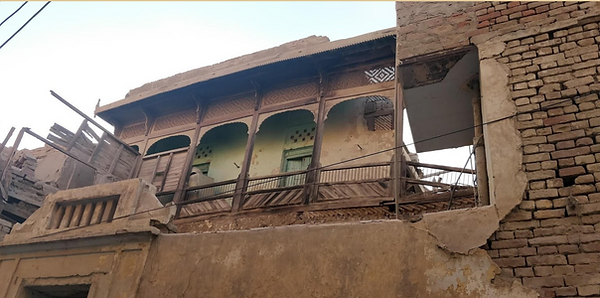
Lulla Haveli - Sattan putan ji Haveli

My grandfather’s home


They then took us to see a well preserved beautiful haveli nearby.
Lakhidar

Raja Raam Youseja, Father and Son, Owners of Deewan Sweets.
I had heard of many fond memories of Lakhidar, the food, the sweets, the sodas…we tried them all, the Mithai shop was owned and operated by the same family.

Professors Naseer Soomro and Professor Gehiraam took us inside a large apartment in an art deco building called Narain Niwas. They said it was built for 7 sons and had 7 apartments. The apartment we saw was very large, beautifully maintained in pristine condition with a lot of very nicely carved teak cabinetry, line cupboards in carved teak wood and a curved ornamental wooden staircase leading upstairs to a fabulous view overlooking Ghanta Ghar and now the broken down Naaz Cinema. On my return speaking to my aunt Mohini Rajpal I discovered the building was her father Nairain Lulla’s home where she grew up.

This imposing 2 storey home with curved balconies in Lakhidar had high ceilings, large terraces and balconies and many bedrooms-at least seven. We met the family living there with 5 sons and daughters-in-law. The house adjoining this house was where my great grandfather Madhavdas Menda lived with his brother and their families next to Naaz cinema. Sadly it was not in good condition.
Many havelis were demolished for their wood and many homes were in a state of disrepair. Few of the legendary havelis remain.
We then visited the Harijan Residential Complex that was built in 1942, on 200 bigha’s donated by Mr. Khushi Ram Daryanii. My grandfather Dr. Kishinchand was also involved in developing it. It was well maintained with gardens, a temple, a school and sewing centre.
Day 9 - Wednesday December 19

We visited Lakhidar. I wanted another look at my great grandfather’s home. I had heard that many had their own bagh (garden) where they visited daily, perhaps worked from and the families picnicked. We visited on such bangh by the railway station — sold to the present occupant for Rs. 1 as the owner left after his son was killed.
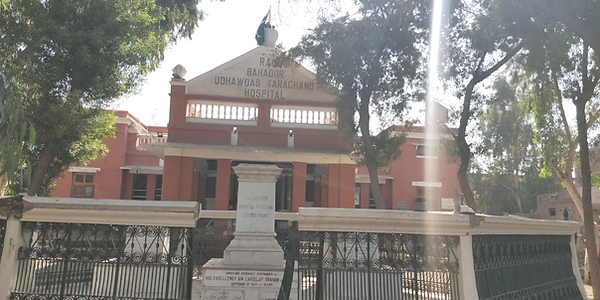
Udhawdas Tarachand Hospital
We visited the Rai Bahadur Udhavdas Tarachand Hospital named after its founder and built in 1937 where even today hundreds of residents pay tribute on his death anniversary by lightning lamps & candles. His damaged statue has been restored and is on view The Museum of Sindhology, Jamshoro which I saw.


Harappa

Standing at the ancient site of Harappa looking at vast mounds, time stoodstill. The guide took me on his scooter around the vast site. At dusk we saw villagers walking back from their fields crossing through the site to go home to the village. I believe many homes in the village are built of the ancient brick.
Day 10-11-12 December 20, 21, 22

Multan
We reached Multan. I had heard our families moved down to Shikarpur from Multan. The soft Seraiki language sounds very similar to the Sindhi language. Home to Adeela and Sohail, we rest, relaxed after our travels, met their family and listened to Adiba Parveen around the fire.

We visited the mausoleum of Sufi saint Sheikh Rukn-ud-Din Abul Fateh. The shrine is considered to be the earliest example of Tughlaq architecture, and is one of the most impressive shrines in the Indian subcontinent. We then shopped for beautiful Jutis and exquisitely embroidered clothes before flying to Karachi.
Day 13 - Sunday December 23 Karachi
Day 14- Monday December 24

I met Noorjehan Bilgrami at Koel Cafe and art gallery. She is responsible for reviving ajrak in its original many stage technique with natural dyes and also works with artisans in Kutch. She is happy to collaborate. We had a lovely dinner at the boat club hosted by Amna and her husband.
Day 15 - Tuesday December 25


I had heard many fond memories of times spent at the Karachi Club. We had a traditional Christmas lunch at the Karachi Club hosted by Ifthikar Uncle and had a glimpse of present day Karachi Society.
Day 16 - Wednesday December 26

Met Dr. Anila Naeem, chairperson and professor at the Department of Architecture and Planning, N.E.D. University of Engineering and technology, Karachi, who has written many books on Shikarpur Heritage and Havelis. She is also happy to collaborate with us.
Day 17 - Thursday December 27 Hyderabad

The Sindh Museum, Hyderabad.
We met Dr. Pardeep Harchandani who escorted us and was on the same committee with Imtiaz Aunty of SOS projects. He was introduced to us by Jeetendra Shahani of DJ College, Karachi. Dr. Pradeep was a young man when he returned from his posting in the army after Partition and found his family and everyone he knew gone. He went to India three times in search of his family unsuccessfully and eventually returned and settled in Hyderabad and married a lady whose father refused to leave. Over the years he has found his family in India but has chosen to continue to live in Hyderabad, Sindh.
Such a treat to see so much of Sindh.

We saw the beautiful Mukhi House restored and handed over by the owners’ family to the Department of Antiquities & Archaeology, Government of Sindh, now a museum.

We were presented with delicious cakes from the famous Bombay Bakery where the lines are still long and the cakes are in limited supply.

School started by Sadhu Vaswani
We drove through the well planned Hirabad with windcatchers on the roof of the homes. Here the Amils and Bhaibands lived in their palatial homes, I saw where Sadhu Vaswani lived and his presence is still felt there today.


These wind catchers or Manghu, as they are called in the local Sindhi language, were fixed on housetops, to catch the southwesterly breeze in the hot summer days and evenings. The breeze entering the wind catchers would penetrate into the room and keep it cool.
Jamshoro


We visited the Institute of Sindhology where we saw the rescued and restored statue of Rai Bahadur Udhavdas Tarachand founder of Udhavdas Tarachand Hospital in Shikarpur.
Mallo

Mallo - style of Westling I have heard my father speaking of learning in an Aakhara when he was growing up in Shikarpur. This image of the exhibit of Mallo is taken in the Institute of Sindology, Jamshoro.


We had lunch at a restaurant overlooking the Indus in Jamshoro, famous for its fresh delicious palla fish I had heard nostalgically many times from my family.
Day 18 - Friday December 28 Karachi

I met Mr. Hameed Akhund, Secretary Endowment Fund Trust a non-profit organisation and has been working on preserving the indigenous culture of Sindh at his office. (Former secretary of culture and heritage department of Southern Sindh province. He was happy to collaborate and lend their textile collection and shore information.
Day 19 - Saturday December 29 Karachi
Day 20 - Sunday December 30 Karachi - Bombay

Bus tour of Karachi as a last farewell as I returned to India.

The connection I felt to Sindh has stayed with me long after my visit, enveloping me with the love I received from Imtiaz Aunty’s family and all the people I met.
Many of my feelings I am unable to express, but it drives me to explore deeper our culture and history and share it with the world. The wonder of this land where such a peaceful and developed ancient Indus Valley Civilisation existed, the Indus on whose banks the Rig Veda was composed. This land where trading to Mesopotamia and Egypt existed even during the Indus Valley Civilisation.
The land where Hindus lived peacefully and flourished during 700 years of Islamic rulers and 200 years of British rule. Where till today the contribution by the Sindhi Hindus to education, healthcare and civil services stand tall serving the community.
These offer glimpses to us of our trading traditions, our ability to integrate and flourish and be contributors to the communities we live in. As a Sindhi I am proud to be part of this heritage.